
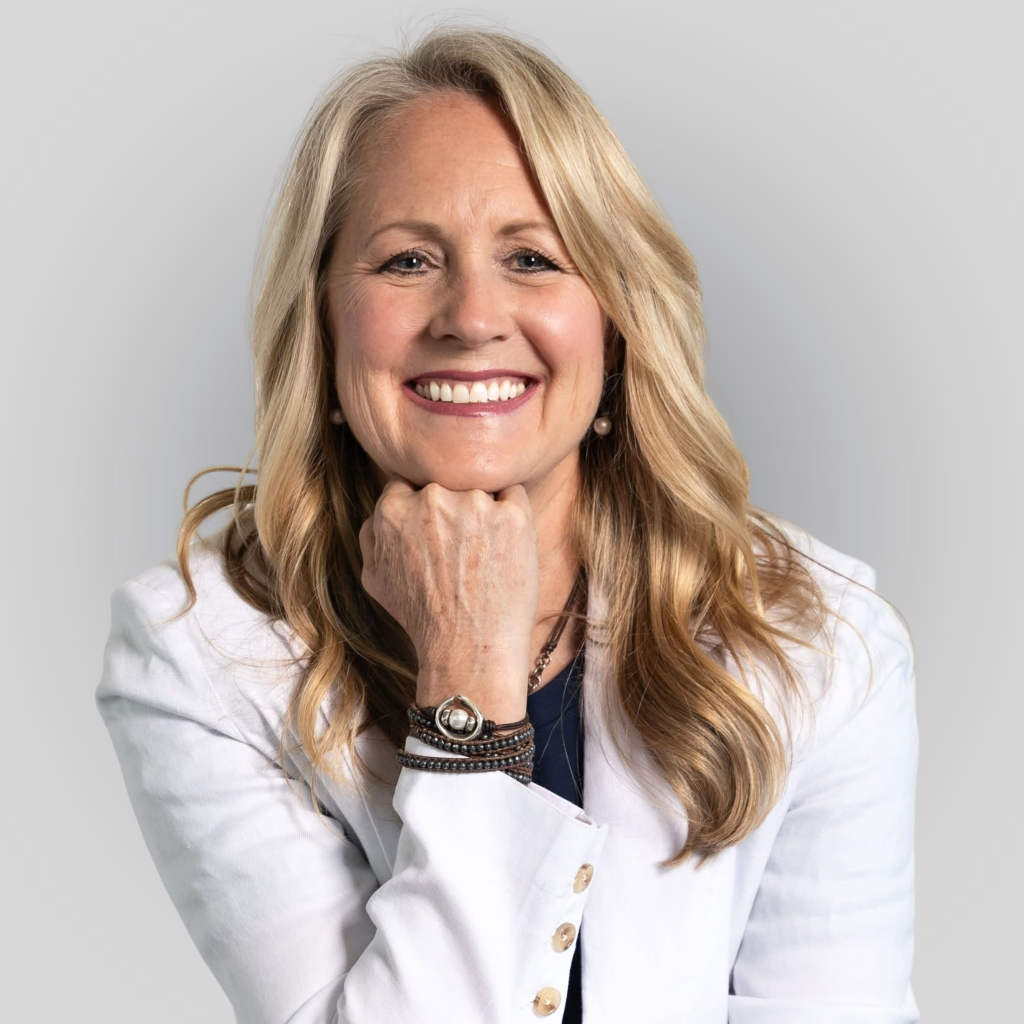
Dale Wilsher is an entrepreneur, executive life and leadership coach, certified behavioral consultant, keynote speaker, and award-winning author. She is the founder of Your Authentic Personality® and works with leaders and organizations on how personality shapes trust, influence, communication, and performance. Her work centers on helping people understand how they are perceived, how they make decisions, and how to build stronger working relationships across differences.
Dale’s background combines coaching, speaking, applied personality assessment, and leadership development. She is an ICF Professional Certified Coach (PCC), Certified Professional Life Coach (CPLC), Certified Career Services Provider (CCSP), Certified Behavioral Consultant in DISC, and Gallup Strengths Champion Coach. She is also a member of the Forbes Coaches Council and serves as faculty for the U.S. Chamber of Commerce’s Institute for Organizational Management and the Professional Christian Coaching Institute. In the conversation, she describes using personality patterns as a practical business tool, especially where leaders need to win support, manage conflict, and create more effective teams.
Background
Dale’s professional path has been shaped by work at the intersection of behavior, leadership, and organizational performance. She entered the field with a strong interest in how people differ, how those differences show up at work, and how leaders can use that insight to improve trust, influence, and execution.
Before building her consulting practice, Dale pursued graduate study in molecular biology, an experience she refers to directly in the episode as formative. That environment sharpened her awareness of how personality, culture, and context can shape whether a person feels understood or constrained in an organization. It also gave her an early view of how pressure to conform can affect performance and self-perception.
Her later career moved into coaching, speaking, and behavioral consulting, where she now works with senior leaders, teams, and organizations. Dale is the author of an award-winning personality book and has delivered keynotes and workshops for corporations, associations, and professional audiences for nearly two decades. Her work bridges emotional intelligence, personality intelligence, leadership psychology, and practical business performance.
Taken together, Dale’s career has developed around a consistent thesis, that many business problems are not just technical or strategic, but also behavioral. Her work is aimed at helping organizations recognize the strengths in difference, rather than treating variation in style as a problem to be eliminated.
Core Expertise
Dale is known for her work in personality-based leadership development, with a particular emphasis on the DISC framework. She helps leaders identify how different personality patterns influence trust, pace, feedback, decision-making, communication, and the way people respond under pressure. Her approach is especially useful in settings where execution depends on collaboration across different working styles.
A hallmark of her method is translating personality theory into concrete business behavior. She pays close attention to observable cues, such as email style, pace of speech, preference for detail, and responses to stress, then uses those signals to help clients adapt communication. Dale also emphasizes that effective teams are not well-rounded individuals, but well-rounded groups, and she repeatedly returns to the idea that leaders should deploy strengths rather than flatten them in the name of consistency.
Academia
Dale earned her undergraduate education at an institution not identified in the available materials.
She later pursued graduate study in molecular biology, which she discusses as a significant part of her development. The available materials do not specify the institution or degree title, and her doctoral work should not be described as a completed doctorate. The relevant point for this conversation is that her scientific training gave her experience in a highly analytical environment and helped shape how she thinks about behavior, systems, and human performance.
Dale is an ICF Professional Certified Coach (PCC), Certified Professional Life Coach (CPLC), Certified Career Services Provider (CCSP), Certified Behavioral Consultant in DISC, and Gallup Strengths Champion Coach. She also serves as faculty for the U.S. Chamber of Commerce’s Institute for Organizational Management and the Professional Christian Coaching Institute.
Key Perspectives that Dale Wilsher Shares on the Podcast
Dale’s central argument is that personality is not a soft issue, but a business variable that affects trust, influence, communication, and performance. She makes the case that leaders often misunderstand their own style, then expect others to respond as they do, which creates blind spots in communication and decision-making. For her, the goal is not labeling people, but recognizing the pattern each person brings into a room and adapting accordingly.
She also emphasizes that people under pressure reveal their default patterns more clearly, whether that means a steady type going quiet, a conscientious type justifying an approach, or a dominant type moving into control. Across the episode, Dale returns to the value of curiosity, self-awareness, and respectful tension, arguing that organizations improve when they make room for different lenses instead of rewarding sameness.
A Quote from this Conversation with Dale Wilsher
“You can see it Florian in people’s emails. You know, if it is a more casual environment, you’re going to see certain people who will add emojis. Maybe it’s in the text if you have a personal relationship with them. Those are people who are more animated. They’re usually more I. The shortest emails I ever see are from D’s because they are abrupt. They are, they want the bullet point. They want the shortest distance to get somewhere.”